

Hot Oil Massage: Benefits, Safety, and What to Expect
Warm oil, slow hands, relaxed muscles, and softer skin are the reasons many people choose a hot oil massage. Despite the name, the oil should feel comfortably warm, never truly hot, so the treatment feels soothing rather than irritating. As the therapist works through areas of tension with flowing strokes, the oil can also leave your skin feeling smooth and moisturized.
A hot oil massage may help you unwind and ease everyday muscle tightness, but it isn’t a cure for a medical condition. The experience depends on the oil used, the therapist’s technique, your comfort level, and the spa’s hygiene and communication standards. You’ll also want to know how to choose between options such as coconut, almond, jojoba, or grapeseed oil, especially if you have sensitive skin or allergies.
Before booking, it helps to understand what happens during a session, how to use warm oil safely at home, and which precautions matter. You’ll also learn what to ask a spa so you can enjoy the treatment with confidence. Let’s start with what a hot oil massage involves and how warm oil changes the experience.
What Is Hot Oil Massage and How Does It Feel?
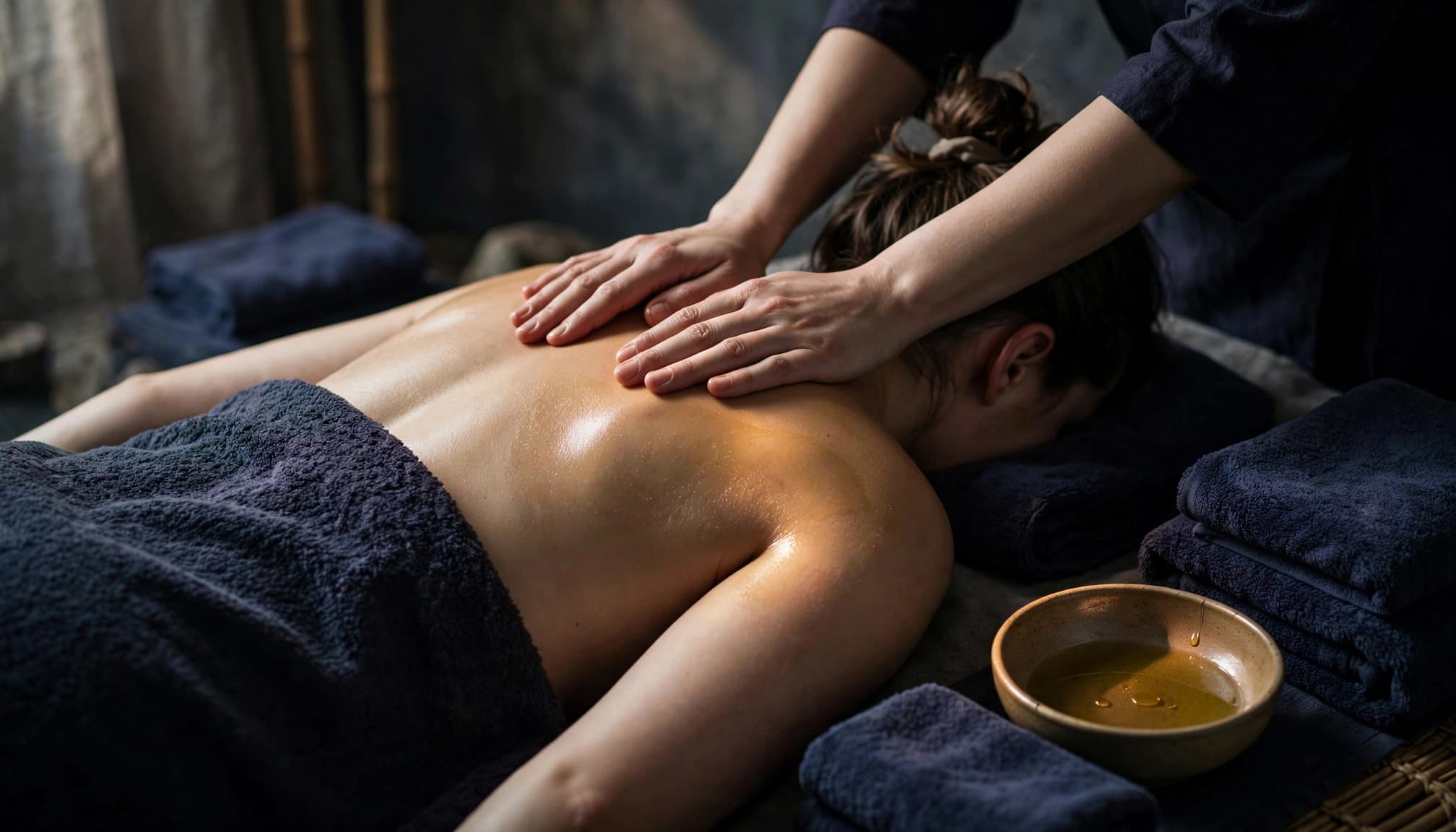
A hot oil massage uses warmed body oil and smooth, flowing strokes to help you relax. Despite its name, the oil should feel soothing rather than hot enough to sting, burn, or make you pull away. The therapist checks the temperature before applying it and adjusts the pressure throughout the session.
The experience usually combines gentle warmth, steady hand movements, light to moderate pressure, and a slower pace than many conventional massages. Oil reduces friction between the hands and your skin, so the therapist can move across broad areas without tugging. That glide can make sustained pressure feel more comfortable, especially around tense shoulders, the back, arms, and legs.
Why Warm Oil Changes the Massage Experience
Warmth may help tight muscles feel less guarded. When your body senses heat and steady contact, you may find it easier to settle into the table and release some everyday tension. The effect is usually comforting, not intense. A warm towel or gently heated oil can make the first few minutes feel more inviting than cool oil applied to the skin.
Oil also lets the therapist maintain long, flowing movements across the body. Without enough lubrication, repeated strokes can create drag or irritation. With oil, the hands can travel smoothly over the skin while the therapist varies speed, direction, and pressure.
The massage may include two broad styles of work:
- Relaxation-focused strokes use a calm rhythm and lighter pressure to settle the nervous system and ease general tightness.
- More targeted work uses slower pressure around areas such as the upper back, hips, or calves when muscle tension feels concentrated.
These approaches can appear in the same session. However, deeper pressure shouldn’t become a test of endurance. If you tense your jaw, hold your breath, or feel sharp pain, tell the therapist immediately. A useful massage creates a sense of relief, not a demand to tolerate discomfort.
Warm oil can make pressure feel smoother, but it doesn’t make painful pressure safe or necessary.
Your therapist may ask whether you prefer light, medium, or firm pressure. Give a direct answer, then speak up if your preference changes as the session continues. Your comfort is part of the treatment, not an interruption to it.
What Happens During a Typical Session
Most sessions begin with a short consultation. You can discuss the areas that feel tense, your pressure preference, skin sensitivities, and any injuries. Tell the provider about allergies, pregnancy, recent surgery, prescription or over-the-counter medications, and health conditions before treatment begins.
This information matters because massage may need to be delayed, modified, or cleared by a clinician in some situations. Mayo Clinic advises clients to disclose recent surgery, wounds, bone problems, bleeding conditions, blood pressure concerns, medications, and allergies before massage therapy. You can review its guidance on medical-based massage therapy if you have a health concern.
Next, the provider prepares the room and confirms the oil. Common choices include coconut, almond, jojoba, and grapeseed oil, although the available options depend on the spa. If you have sensitive skin, ask whether the oil contains fragrance or essential oils. A patch test may be sensible when you have reacted to topical products before.
The therapist then checks the temperature on their own skin or with another safe method before applying the oil. You should feel comfortable warmth, never a stinging or scalding sensation. You remain covered with a sheet or towel, with only the area being treated exposed. Proper draping protects your privacy and helps keep your body warm.
Treatment often begins with light opening strokes. These movements help spread the oil and give you time to adjust to the therapist’s touch. The therapist may then work through larger muscle groups using gliding strokes, kneading, or controlled pressure. They should avoid wounds, irritated skin, surgical sites, and areas that need medical attention.
Session length varies by provider. Some full-body treatments last around 15 to 30 minutes, while others run longer depending on the spa, service menu, and areas covered. A quiet finish gives you time to notice how you feel before sitting up. Move slowly afterward, drink water if you want it, and mention any unusual pain or skin reaction to the provider.
Hot Oil Massage Compared With a Regular Oil Massage
Both treatments can use similar massage techniques, including gliding strokes, kneading, and pressure adjusted to your needs. The main difference is the temperature of the oil.
| Feature | Hot oil massage | Regular oil massage |
|---|---|---|
| Oil temperature | Warmed to a soothing temperature | Usually room temperature or only mildly warm |
| Sensation | Adds gentle heat to smooth pressure | Feels cooler and more neutral on the skin |
| Muscle comfort | May help tense areas feel easier to work | Can still relax muscles through touch and pressure |
| Skin benefits | Provides topical oil and may feel comforting on dry skin | Provides similar lubrication and moisturization |
| Good fit for | People who enjoy warmth and a slower, cozy session | People who prefer neutral temperatures or feel heat-sensitive |
Warm oil may suit you when you want extra comfort during relaxation-focused work. It can also make broad, slow strokes feel more fluid across the skin. However, the heat does not automatically make the treatment more effective, and it isn’t better for everyone.
A regular oil massage may be the smarter choice if you feel sensitive to warmth, have easily irritated skin, or simply prefer more temperature control. You can also ask for room-temperature oil during a session and change your preference later. The best option is the one that lets your muscles relax without irritation, pressure that feels excessive, or oil that triggers a skin reaction.
Hot oil massage is also different from Ayurvedic oil massage, such as abhyanga. Abhyanga is a traditional Ayurvedic practice with its own methods, cultural context, and treatment goals. A general spa hot oil massage may borrow warm oil and flowing movements without following Ayurvedic principles, so the two terms shouldn’t be treated as identical.
The Main Benefits of Hot Oil Massage for Body and Mind
A hot oil massage may help you feel more relaxed, ease everyday muscle tightness, support comfortable movement, and leave dry skin feeling smoother. The results vary from person to person, and most benefits are short term rather than a treatment for an underlying health condition.
The warmth, steady touch, and unhurried pace often make the treatment feel especially comforting after a demanding day. However, your response depends on the oil, pressure, room temperature, and your personal health needs. Research also supports a balanced view, with massage showing the clearest benefits for relaxation and temporary relief from some types of muscle discomfort. You can review the reported benefits of massage therapy for additional medical context.
Relaxation, Stress Relief, and Better Rest
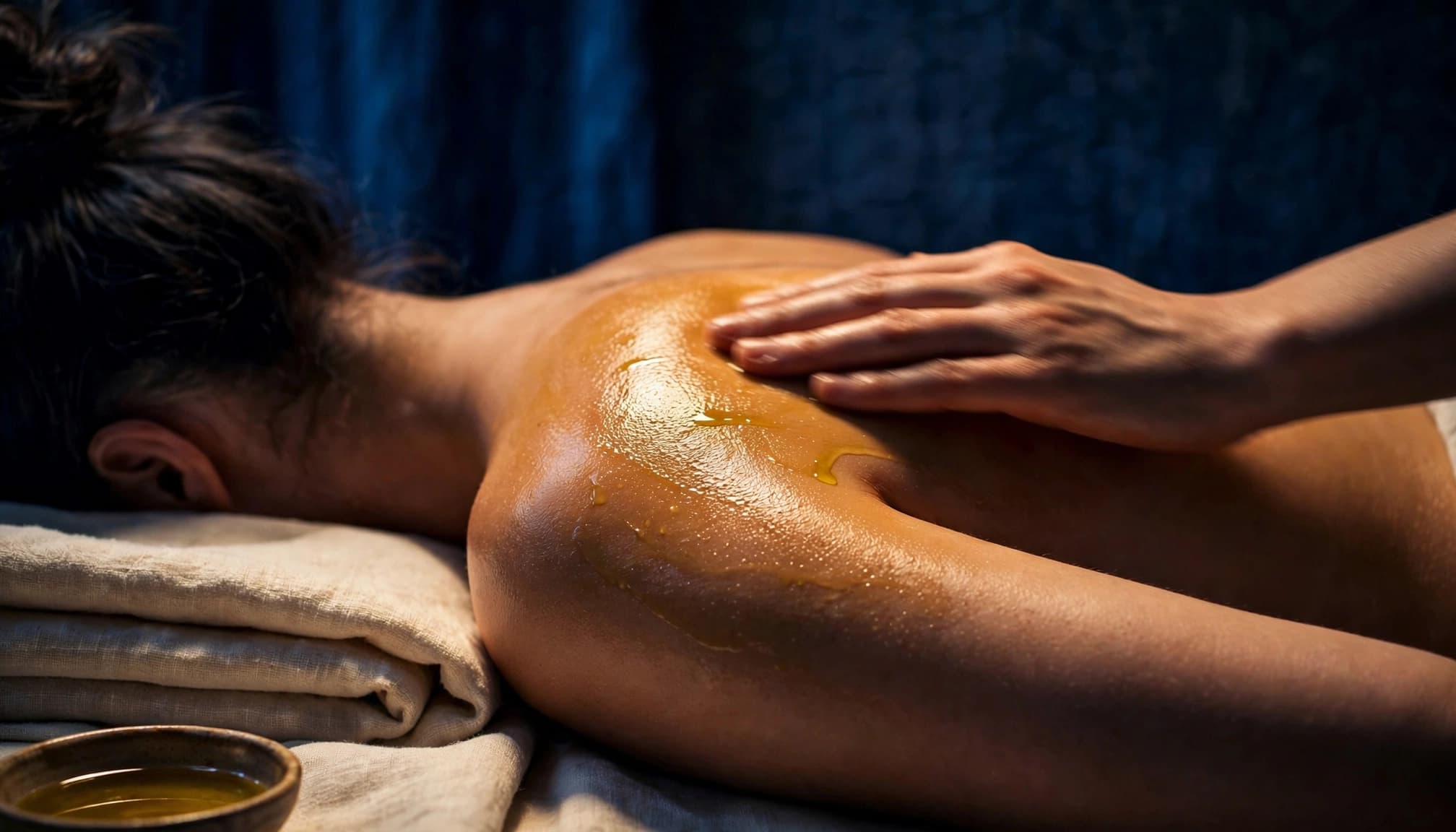
Warmth can help your body feel less guarded, while slow strokes give you fewer sensory demands to process. In a quiet room, the combination of gentle heat, soothing touch, and steady breathing may help you shift out of work mode and settle into a calmer state.
That makes a hot oil massage appealing after a long day of sitting, commuting, or managing responsibilities. Some people also schedule one in the evening because the peaceful setting and slower rhythm make it easier to begin a bedtime routine. Massage may support relaxation and better rest, but it shouldn’t be presented as a cure for anxiety or insomnia.
Your surroundings matter as much as the technique. To create a calmer session:
- Reduce phone alerts, conversation, and unnecessary background noise.
- Choose comfortable lighting instead of bright overhead lights.
- Tell the therapist if the room feels too warm or too cool.
- Allow a little time afterward before driving, exercising, or returning to demanding tasks.
The minutes after a massage can affect how long the relaxed feeling lasts, so avoid rushing straight into a crowded schedule when possible.
Muscle Tension, Stiffness, and Everyday Discomfort
Warm oil may help tight areas feel more comfortable because heat can make the surface tissues feel less rigid. The oil also reduces friction, allowing the therapist to use gradual, flowing pressure across the shoulders, neck, back, hips, arms, and legs.
Slow pressure gives you time to adjust instead of forcing tense muscles to respond all at once. As the session continues, you may notice easier movement or less awareness of ordinary stiffness. These effects are usually temporary. Massage can support comfort, but it doesn’t correct an injury, nerve problem, joint disease, or other cause of ongoing pain.
Tell the therapist where you feel tension before the session begins. During treatment, ask for lighter pressure if an area feels tender, bruised, numb, or sharply painful. You shouldn’t need to hold your breath, tighten your jaw, or tolerate pain to receive a useful massage.
Severe, sudden, worsening, or persistent pain deserves evaluation by a qualified health professional. Massage should complement appropriate medical care, not delay it. Evidence for pain relief also varies by condition, and research reviews describe massage benefits as limited or short term for many pain problems.
Circulation and the Feeling of Warmth
Heat can widen small blood vessels near the skin, which may increase the feeling of warmth in the treated area. Massage adds movement across the tissues through gliding strokes and gentle pressure. Together, these effects may create a temporary sense of looseness and improved circulation.
You might notice warmer hands, feet, shoulders, or legs during and shortly after the session. That sensation doesn’t prove that massage has corrected poor circulation or removed toxins. A hot oil treatment also cannot cure vascular disease or replace assessment for symptoms such as unexplained swelling, color changes, persistent coldness, or leg pain.
Speak with a health professional before booking if you have a history of blood clots, take blood thinners, have painful varicose veins, or live with a heart or circulation condition. Massage may need to be delayed or modified in these situations. Rare serious complications have been reported, so the NCCIH massage therapy guidance is useful when you have medical concerns.
Softer, More Comfortable Skin
Carrier oils such as coconut, jojoba, almond, or grapeseed oil can reduce dryness by adding lubrication to the skin’s surface. After treatment, your skin may feel smoother, softer, and more supple. Oil also helps the therapist’s hands glide without repeated rubbing.
These cosmetic benefits are different from medical treatment. Massage oil won’t cure eczema, skin infections, open wounds, burns, or severe irritation. Avoid applying oil to damaged skin unless a qualified clinician has advised you to do so.
Before the session, check the ingredients and disclose allergies, scent sensitivity, or past reactions to topical products. Fragrance and essential oils can irritate some people, even when the carrier oil itself feels comfortable. A small patch test may help if you have reacted to skincare products before.
Finally, ask how the oil behaves after application. Some formulas can stain clothing, towels, or sheets, and heavily scented oils may linger on the skin. Wear clothing you don’t mind getting oily, and follow the therapist’s advice about showering or leaving the oil on after treatment.
How to Choose the Best Oil and Use Heat Safely
The best hot oil massage setup depends on more than personal preference. Choose an oil that suits your skin, confirm every ingredient, warm it gently, and keep communication open throughout the massage. Comfortably warm is the correct standard. Oil that feels hot, sharp, or irritating is too hot.
Popular Carrier Oils and What They Offer
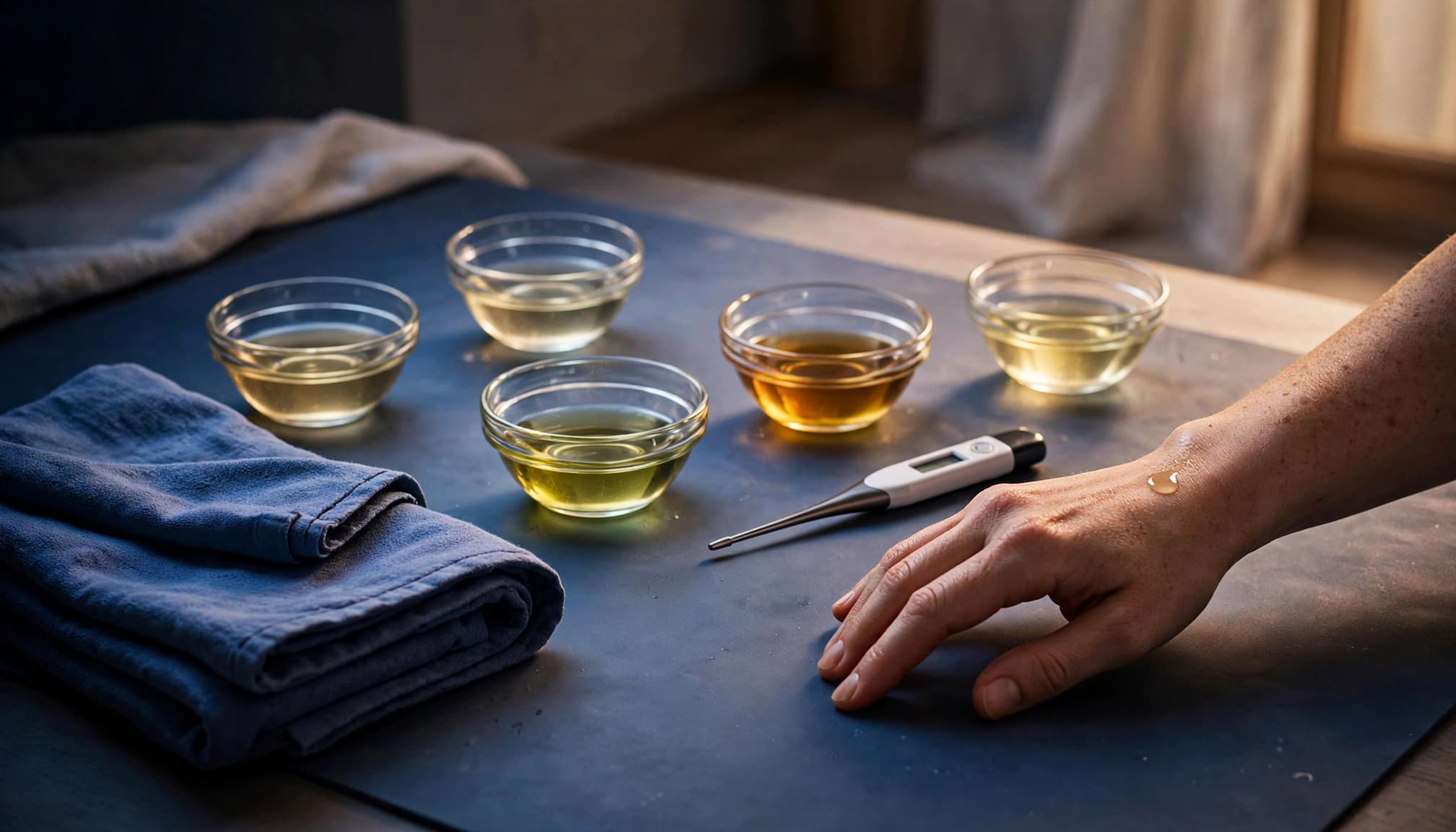
Carrier oils are the base products used to help hands glide across the skin. Each one feels different, so your choice should reflect your skin type, scent preference, and allergy history.
- Almond oil feels smooth and moderately rich. It usually has a mild scent and provides good slip without feeling extremely heavy. However, sweet almond oil comes from a tree nut, so people with almond or other nut allergies need special care. Ask whether the spa uses almond oil before treatment, and choose another carrier oil if there is any uncertainty.
- Jojoba oil has a lighter, silky texture and little noticeable scent. It absorbs more readily than some heavier oils, although it can still provide enough glide for massage. Many people with combination or sensitive skin prefer its less greasy finish, but any product can cause a reaction.
- Olive oil is rich, thick, and easy to find. Its noticeable scent may not suit everyone, and it can leave a heavier layer on the skin. It may work well for dry skin or a slower massage, but people who dislike greasy residue may prefer a lighter option.
- Coconut oil feels smooth and nourishing, with a mild tropical scent. It can become firm in a cool room and liquefy when warmed. Fractionated coconut oil stays liquid more consistently, but check the exact product because formulas vary.
- Grapeseed oil is generally light, thin, and easy to spread. It usually has a subtle scent and a less oily finish, making it appealing when you want a faster-absorbing option. People with grape sensitivities should still review the ingredients and stop use if irritation develops.
No oil is universally best. Your skin may prefer jojoba while someone else’s skin feels more comfortable with olive or coconut oil. Before booking, ask the professional to explain the products being used, including the carrier oil, added fragrance, preservatives, and any essential oils.
A professional should also tell you whether the oil is intended for massage, whether it contains known allergens, and how they handle spills and clean towels. If you have a history of eczema, contact dermatitis, or reactions to cosmetics, a plain, unscented carrier oil is often the simplest place to start.
Essential Oils Need Careful Dilution
Essential oils are concentrated plant extracts, not ready-to-use massage oils. Never apply them directly to the skin, even if the scent seems mild. They need careful dilution in a suitable carrier oil, and a stronger scent doesn’t make a massage more effective.
Patch-test a diluted blend on a small area, such as the inner forearm, before using it over a larger part of the body. Wait and check for itching, burning, swelling, hives, redness, or blistering. A patch test can reduce surprises, but it can’t guarantee that a full-body application will cause no reaction.
Strong fragrance can also trigger headaches, nausea, breathing discomfort, or skin irritation. Tell the therapist if you prefer fragrance-free products, and don’t feel pressured to add an essential oil. Plain carrier oil is a safe, effective choice for many people.
Pregnancy requires extra caution because not every essential oil is suitable at every stage. The International Federation of Aromatherapists recommends conservative dilution and professional guidance during pregnancy; its essential oil safety guidance also emphasizes careful use around health conditions and vulnerable groups. Speak with your prenatal clinician before using a scented massage blend, especially if you have asthma, allergies, epilepsy, sensitive skin, or take regular medication.
The Right Temperature Prevents Burns
Warm the oil gently in a heat-safe container, and never leave it unattended. A bowl of warm water can provide more gradual heating than placing the oil directly over high heat. Keep the blend closed or covered so water doesn’t enter it.
Before applying the oil, place a small amount on the inner wrist. The skin there is useful for noticing excessive heat, but the test shouldn’t replace ongoing communication. Ask the recipient how the oil feels after the first application and again as you move to different body areas.
Avoid these common mistakes:
- Don’t use boiling oil or apply oil straight from a high-heat source.
- Don’t microwave oil without thorough stirring and repeated testing, because microwaves can create hot spots.
- Don’t rely only on a warmer’s temperature setting. The container, room, oil volume, and heating time can change the actual temperature.
- Don’t continue if the recipient reports stinging, burning, sharp heat, redness, or discomfort.
If the oil feels too hot, wipe it away and allow the skin to cool. A massage should feel comfortably warm, not brave or intense. When in doubt, use cooler oil and warm it gradually.
Simple Home Setup for a Comfortable Massage
A safe home massage needs a clean, uncluttered area. Warm the room first, then cover a washable surface with a clean sheet or towel. Keep extra towels nearby for spills, and wash anything that touches the oil after the massage.
Use soft lighting that still lets you see the skin clearly. Close the door, reduce interruptions, and provide enough privacy for the recipient to remain comfortably covered. Only expose the body area being massaged, and check in before changing positions or moving to another area.
Keep the oil away from eyes, electronics, slippery floors, and open flames. Place the bottle on a stable surface instead of beside the edge of a table. Wipe spills immediately, because massage oil can make tile, wood, and bathroom floors dangerous.
At home, a short, focused massage is often safer than attempting an ambitious full-body treatment. Choose the shoulders, hands, feet, or calves, then stop if either person feels tired, uncomfortable, dizzy, or distracted. Clean equipment, moderate warmth, and clear communication matter more than using a large amount of oil or extending the session.
How to Give a Safe Hot Oil Massage at Home
A home hot oil massage can feel relaxing when you keep the method simple, gentle, and easy to stop. The oil should be lukewarm, the pressure should remain comfortable, and the person receiving the massage should control the pace. This is a relaxation technique, not a substitute for medical or professional massage care.

Prepare the Person, Space, and Oil
Start with a short conversation before anyone lies down. Ask about allergies, sensitive skin, fragrance reactions, current pain, recent injuries, broken skin, swelling, fever, medical conditions, pregnancy, blood-thinning medication, and recent surgery. Massage may need to be postponed or modified in these situations. If the person has an unexplained symptom or a health condition that could affect safety, ask a clinician before proceeding.
A person who feels unwell, dizzy, feverish, or unusually tired should skip the massage. You should also avoid massage over wounds, rashes, burns, infections, bruises, recent incisions, or areas with unexplained pain. Guidance from the American Institute of Alternative Medicine identifies cuts, bruises, and sore areas as locations that may require avoiding massage.
Next, agree on pressure, body areas, preferred oil, and whether the person wants conversation or quiet. Ask about temperature preferences as well. Clear communication prevents the giver from guessing and helps the recipient relax.
Prepare a clean, warm room with a stable surface, fresh towels, and enough space to move safely. Place a clean sheet or large towel over the surface, then keep additional towels nearby for spills. The recipient should remain covered, with only the body area being massaged exposed. Close the door, limit interruptions, and ask permission before changing positions or uncovering another area.
Warm a small amount of massage oil in a heat-safe bottle or bowl placed inside a bowl of warm water. Warm tap water for about three to five minutes is usually enough for a small quantity. A controlled oil warmer can also work, but don’t rely only on its setting. The container, heating time, and amount of oil can affect the actual temperature.
Avoid microwaving oil because it can develop hot spots. Never heat oil directly over a flame or on a high stovetop setting. Test a drop on the inner wrist or forearm before applying it. The oil should feel gently warm, not hot, sharp, or prickly. Test it again on the recipient’s skin, then ask how it feels.
Start With Light Pressure and Slow Strokes
Have the person lie in a comfortable position, usually on their stomach for the back or on their back for the arms and legs. Use pillows to support the head, knees, or ankles. A supported body is less likely to tense during the massage.
Pour a small amount of oil into your palm instead of placing a large quantity directly on the skin. Rub your hands together briefly, then rest them on the area before moving. This gives the recipient time to adjust to your touch and prevents a sudden cold or slippery sensation.
Begin with broad, slow strokes. On the back, move smoothly along the larger muscles with light pressure. On the arms and legs, long sweeping strokes can travel toward the torso, then return with less pressure. Keep your hands relaxed and use the broad surface of your palms rather than digging in with fingertips or knuckles.
The first few minutes should feel like a gradual introduction, not the main event. Gentle contact helps you notice whether the skin feels unusually hot, tender, swollen, or irritated. It also shows whether the recipient is holding their breath or tightening their muscles.
Check in often, especially after the first application of oil and whenever you change pressure. Ask, “Is this pressure comfortable?” or “Does the oil feel warm enough?” Silence doesn’t prove that the massage feels good. Some people stay quiet even when they feel uncomfortable, so make direct check-ins part of the process.
Increase pressure only if the recipient clearly requests it and remains relaxed. Stop or lighten your touch if they tense, pull away, hold their breath, or describe the sensation as sharp. Massage should create comfort, not test how much discomfort someone can tolerate.
Move Through the Body Without Rushing
A simple sequence helps you stay organized without forcing a full-body treatment. Start with the back and shoulders, then move to the arms and hands, legs and feet, and finish with lighter strokes.
For the back and shoulders, use slow gliding movements beside the spine rather than pressing directly on the spinal bones. Broad circles may feel comfortable around the upper back or shoulder muscles when the area feels tight. Keep the pressure moderate and avoid trying to break up knots with force.
Move to one arm at a time. Use long strokes along the upper arm and forearm, then make gentle circles across the palm. Support the wrist and keep the fingers relaxed. If the person reports tingling, numbness, or shooting pain, stop working on that limb.
For the legs, use long strokes over the larger muscle areas and gentle movements around the feet. Avoid deep pressure on the inner legs if there is any concern about blood clots, pregnancy complications, recent injury, or unexplained swelling. One-sided warmth, redness, swelling, or calf pain requires medical attention rather than massage.
Avoid the front of the neck, throat, broken skin, swollen areas, active rashes, recent surgical sites, and places with unexplained pain. Abdominal massage should be gentle or skipped if you’re uncertain. Never press firmly into the abdomen during pregnancy or after surgery without specific medical guidance.
Stop immediately if the person feels burning, sharp pain, dizziness, numbness, breathing trouble, chest pain, or that something is wrong. A shorter session with careful technique is safer than rushing through every body area. Ten focused minutes on the shoulders can be more comfortable and useful than an uncomfortable attempt at a full-body massage.
Finish, Clean Up, and Care for the Skin
End with lighter, slower strokes so the body can adjust before the contact stops. Then remove your hands and let the person rest for a few quiet minutes. Ask how they feel before they sit up.
The person can remain still for about five to ten minutes, then sit up slowly. Sudden movement after a relaxing massage may leave some people lightheaded. Offer water if they want it, and recommend warm or lukewarm water for showering rather than very hot water.
Wipe away excess oil with a clean towel, especially from the feet, hands, and areas that will contact clothing. Clean any spilled oil from the floor immediately because it can create a slipping hazard. Wash oily towels and sheets according to their care instructions, and wipe down the massage surface before storing the supplies.
Watch the skin for delayed redness, itching, swelling, hives, blistering, or irritation. Mild temporary warmth may fade, but worsening redness or discomfort needs attention. Stop using the oil if a reaction develops, remove the residue gently, and seek medical advice if the reaction is severe or doesn’t improve.
Who Should Avoid Hot Oil Massage or Ask a Doctor First?
Hot oil massage is relaxing for many people, but warmth and pressure can worsen certain health problems. Before booking, share your medications, allergies, recent procedures, ongoing symptoms, and any changes in your health with the provider. If you’re unsure whether massage is appropriate, ask your clinician first.

When It Is Best to Postpone Treatment
Wait until you feel well and your skin has healed before receiving a hot oil massage. Massage can irritate damaged tissue, increase discomfort, or spread infection to other areas and surfaces.
Postpone your appointment if you have:
- A fever, flu, contagious illness, or a general feeling of being unwell.
- An active skin infection, contagious rash, or unexplained spreading redness.
- Open cuts, broken skin, active bleeding, or wounds that haven’t fully healed.
- A fresh sunburn, blister, burn, or severely irritated skin.
- Acute inflammation, significant bruising, painful swelling, or a recently injured area.
- Unexplained one-sided leg swelling, warmth, redness, or calf pain.
Massage over an infection or rash may aggravate the skin and expose the practitioner or other clients. Likewise, rubbing a sunburn, open cut, or inflamed area adds friction and pressure where the body needs time to repair itself. The American Institute of Alternative Medicine’s massage contraindication guidance also identifies infections, wounds, blood clots, and uncontrolled conditions as reasons to avoid or modify treatment.
Resume massage after the illness, infection, rash, burn, or wound has resolved. If symptoms persist, worsen, or remain unexplained, ask a clinician whether treatment is appropriate instead of relying on a spa provider’s opinion.
When Medical Approval or Special Training Matters
Some conditions don’t always rule out massage, but they require medical approval or a modified technique. Heat can make you less aware of excessive temperature, while pressure can aggravate fragile tissue, affect circulation, or worsen symptoms.
Speak with your doctor or prenatal clinician before booking if you are pregnant, especially during the first trimester or with a high-risk pregnancy. Choose a practitioner trained in prenatal massage rather than a general spa service. A prenatal-trained therapist understands safer positioning, pressure limits, areas to avoid, and when to stop treatment.
You should also ask for clearance after recent surgery, particularly when an incision is still healing. Fresh surgical sites and healing scars need protection, and pressure may interfere with recovery. Tell the therapist about the procedure date, incision location, restrictions, and any postoperative symptoms.
Medical guidance is also important if you have:
- A current or previous blood clot, clotting disorder, thrombosis, or painful varicose veins.
- Heart disease, heart failure, or another unstable cardiovascular condition.
- Uncontrolled high blood pressure or unusually low blood pressure.
- Diabetes, nerve damage, neuropathy, or reduced sensation.
- Unexplained swelling, persistent pain, or circulation problems.
Massage should never be performed over a suspected blood clot. Pressure and increased circulation could create serious danger if a clot moves. A history of clots doesn’t automatically mean you can never receive massage, but your clinician should decide whether it is safe and what techniques to avoid. Deep pressure is especially inappropriate when clot risk has not been assessed.
Diabetes and nerve damage also deserve special attention. Reduced sensation can prevent you from noticing that oil is too hot or that pressure is causing tissue damage. Ask for lower heat, gentle pressure, frequent check-ins, and careful avoidance of areas with poor circulation or slow healing.
Heart conditions and uncontrolled blood pressure may affect how your body responds to warmth, touch, and changes in position. Sit up slowly after treatment, and stop if you feel lightheaded, short of breath, or unwell. A qualified provider should review your condition before treatment begins.
Skin Allergies and Product Sensitivity
A hot oil massage can trigger a reaction if the product contains an ingredient your skin or immune system doesn’t tolerate. Ask for the complete ingredient list before the session, including the carrier oil, fragrance, essential oils, and preservatives.
Possible triggers include nut oils such as almond oil, scented blends, concentrated essential oils, and preservatives. If you have sensitive skin or a history of contact dermatitis, request an unscented carrier oil such as plain jojoba or another product your clinician has previously recommended. Even familiar ingredients can cause reactions, so don’t assume that a natural product is automatically safe.
A small patch test can help. Apply a tiny amount of the exact product to a limited area and monitor it before using the oil over your whole body. A patch test lowers the chance of a surprise reaction, but it can’t guarantee that a larger application will cause no symptoms.
Stop the massage and remove the oil if you develop itching, hives, burning, redness, or swelling. Breathing difficulty, throat tightness, facial swelling, or major swelling is an emergency. Seek immediate medical help rather than waiting to see whether the reaction fades.
Warning Signs During or After the Massage
Tell the practitioner to stop immediately if you feel burning, sharp pain, dizziness, nausea, numbness, unusual swelling, breathing difficulty, or faintness. Don’t stay quiet because you worry about interrupting the appointment. The therapist can lower the temperature, reduce pressure, change position, or end the session.
Mild relaxation, temporary warmth, and a slightly oily feeling are normal. Worsening pain, blistering, persistent burning, spreading rash, marked swelling, or new numbness are not expected responses. These symptoms may indicate a skin reaction, heat injury, circulation problem, or another issue that needs attention.
Afterward, seek medical care if severe symptoms develop or if discomfort doesn’t improve after you stop treatment and remove the oil. Chest pain, sudden shortness of breath, fainting, facial swelling, or signs of a serious allergic reaction require urgent help. A safe hot oil massage should leave you comfortable, not wondering whether you need to endure the symptoms.
What to Look for When Booking Hot Oil Massage at Sherry Massage Spa
Choosing a hot oil massage at Sherry Massage Spa should involve more than finding an open appointment. You need clear information about the treatment, products, safety practices, and total cost before you commit. Since service menus, prices, hours, and policies can change, confirm current details directly with the spa.
A reliable provider should answer your questions without rushing you. You should also feel comfortable declining scented oils, firm pressure, or any treatment detail that doesn’t suit your body.
Questions to Ask Before Making an Appointment
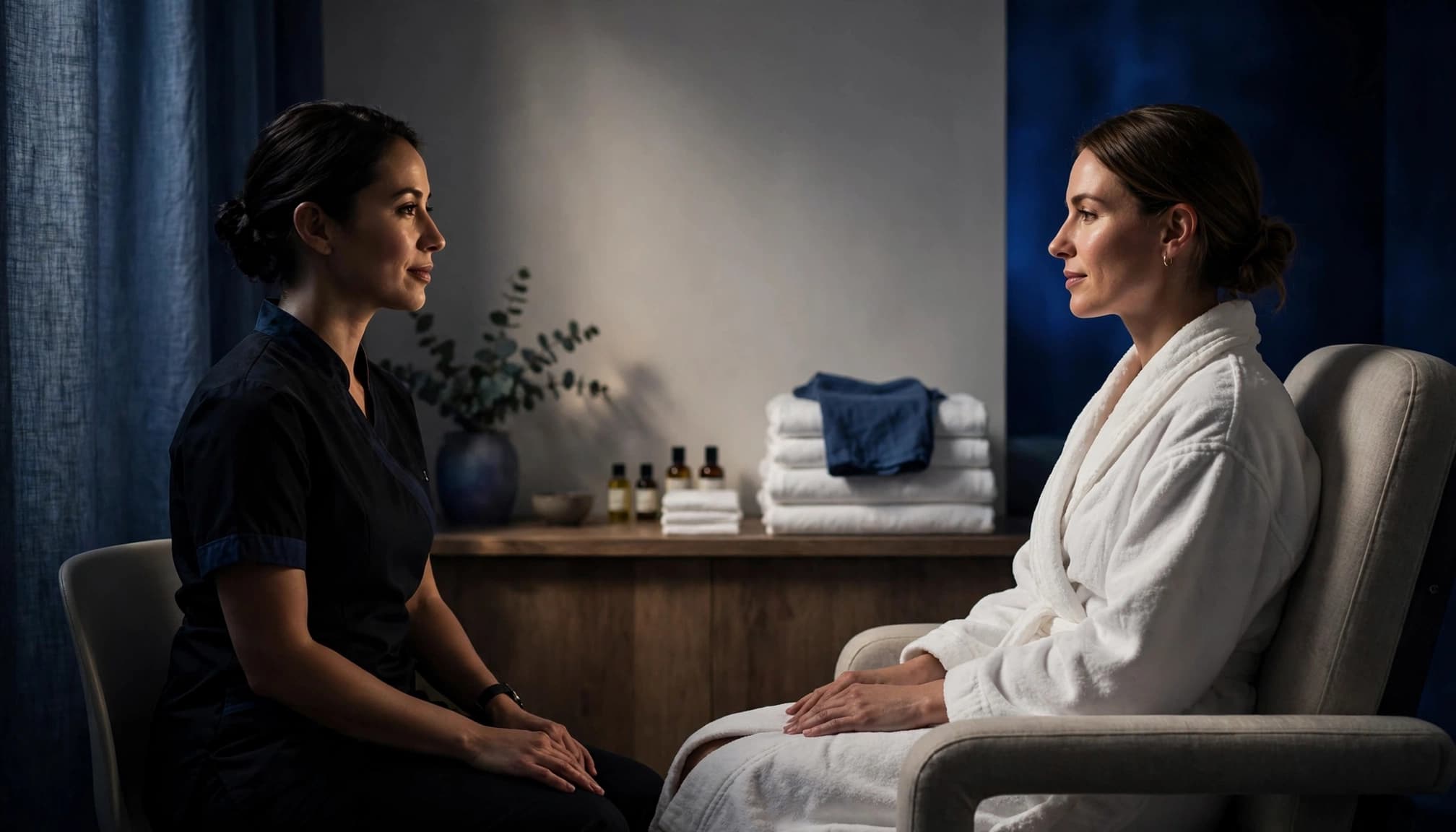
Before booking, ask whether hot oil massage is currently available and which session lengths the spa offers. A treatment described as an oil massage may use room-temperature oil, so confirm that the oil will be warmed and ask how the temperature is controlled.
Use these questions to guide the conversation:
- What appointment times are available, and how long does each session last?
- What is the current price, and are there any extra charges?
- Which carrier oils are available, such as jojoba, coconut, almond, or grapeseed?
- Do the oils contain fragrance, essential oils, preservatives, or nut ingredients?
- How does the therapist heat and test the oil before applying it?
- How much massage experience does the therapist have with hot oil treatments?
- Can the pressure be adjusted during the session?
- Does the spa accommodate pregnancy, sensitive skin, allergies, or medical conditions?
- What should I do if the oil feels too warm or the pressure becomes uncomfortable?
- What are the cancellation, rescheduling, and payment policies?
- Is there any aftercare advice, such as when to shower or what clothing to wear?
A trustworthy provider should answer clearly and explain unfamiliar terms. You shouldn’t need to guess which product will touch your skin or whether the advertised treatment matches your expectations.
Tell the spa about allergies, eczema, fragrance sensitivity, pregnancy, recent surgery, blood-thinning medication, circulation problems, or unexplained pain. The therapist may recommend a different product, modify the session, or ask you to seek medical clearance first.
The same standard applies to pressure. A therapist can offer firm work, but they shouldn’t pressure you to accept painful techniques. Sharp pain, burning, numbness, or a strong urge to pull away are clear reasons to stop or adjust the treatment. Professional massage guidance also emphasizes clear limits within the therapist-client relationship, as described in this massage therapy code of practice.
How to Judge Cleanliness, Comfort, and Professional Care
When you arrive, notice whether the treatment area looks prepared for your appointment. Clean linens should cover the massage surface, used towels should be removed, and bottles or tools should appear organized rather than sticky or cluttered. The therapist should wash or sanitize their hands before treatment and after touching shared surfaces.
A brief consultation should happen before the massage begins. You should discuss the body areas to treat, pressure preference, oil ingredients, injuries, health conditions, and any areas that must be avoided. If the therapist skips these questions and starts applying oil immediately, ask for the consultation you need.
Privacy matters throughout the appointment. A professional spa should provide a private treatment space, explain where to change, and use safe draping that exposes only the area being massaged. You should never feel pressured to undress beyond what is necessary or remain uncovered.
Professional boundaries should also be clear. The therapist should explain what they plan to do, ask permission before changing position or working near a sensitive area, and respect your response without argument. If you say stop, the massage should stop immediately.
A comfortable massage includes a comfortable way to give feedback. You should be able to request less pressure, cooler oil, more coverage, or a different position at any point.
The room should feel calm rather than rushed. You should have enough time to settle in, ask questions, and get dressed afterward. If the environment feels unsafe, the therapist ignores your concerns, or the spa refuses to explain its products, you can leave without continuing the appointment.
How to Compare a Spa Session With Home Massage
A home massage can work for simple relaxation when the setup is clean, the oil is tested carefully, and the pressure stays gentle. It may also offer more privacy and convenience, especially when you want a short shoulder, hand, or foot massage without traveling.
However, a spa session provides a more controlled environment and access to a therapist who can position your body, support tense areas, and adjust technique as the session develops. A professional table, clean linens, proper draping, and a planned treatment can make a longer massage more comfortable.
Cost is another difference. Home massage may use products you already own, while a spa appointment includes the provider’s time, space, equipment, and service policies. Compare the full price rather than focusing only on the oil itself.
Privacy can favor either option. Home treatment may feel more personal, but a professional spa should provide a private room and clear boundaries. Ask how the spa handles draping and whether you can request a quiet session.
For a home massage, keep the oil comfortably warm, avoid broken or irritated skin, and stop if the recipient feels pain, dizziness, burning, numbness, or unusual swelling. A spa may be the better choice when you want expert positioning, help reaching your back or legs, or a fuller treatment with carefully adjusted pressure.
Before booking at Sherry Massage Spa, confirm the current treatment name, duration, oil options, price, payment method, cancellation rules, and aftercare guidance. Those details help you compare the appointment fairly and decide whether the service matches what you want.
Conclusion
A hot oil massage can make a familiar massage feel smoother and more comforting. Warm, controlled oil helps reduce friction, supports relaxation, eases everyday muscle tightness, and leaves dry skin feeling softer. The strongest benefit comes from comfort, not extreme heat or intense pressure.
Safety should guide every session. The oil must feel pleasantly warm, never painfully hot, and the massage should stop if you notice burning, sharp pain, dizziness, numbness, swelling, breathing difficulty, or skin irritation. If you’re pregnant, ill, recovering from surgery, managing circulation problems, or living with reduced sensation, seek medical guidance before booking.
Choose a trained, communicative provider who explains the ingredients, checks the oil temperature, respects your boundaries, and answers questions about policies and aftercare. Whether you prefer a professional spa treatment or a simple home massage, select the setting and style that match your comfort, health needs, and expectations.