

Deep Tissue Massage: Benefits, Risks, and What to Expect
Persistent muscle tension, limited movement, workout soreness, or pain that lighter massage hasn’t eased can lead you to deep tissue massage. The technique uses slow, focused pressure on deeper layers of muscle and connective tissue, but it isn’t simply a stronger version of Swedish massage. A qualified therapist adjusts the pressure to your needs, and productive treatment should never involve sharp, radiating, or worsening pain.
Deep tissue massage may offer short-term relief for some muscle pain and stiffness, although the evidence is mixed and it isn’t a cure for chronic pain or medical conditions. You should also know what to expect after treatment, including possible tenderness for 24 to 72 hours, along with the safety concerns that may require a gentler approach or medical clearance.
This guide explains potential benefits and the limits of current evidence, then covers safety, the steps in a typical session, aftercare, and comparisons with other massage styles. You’ll also find practical guidance on pricing factors and choosing a qualified therapist who asks about your health history before treatment. First, let’s look at what deep tissue massage involves and how it differs from Swedish massage.
Key Takeaways
- Deep tissue massage may ease muscle pain, stiffness, and tension, but relief is often short term and evidence remains mixed.
- Expect possible tenderness for 24 to 72 hours, especially after focused work on tight or overused muscles.
- Sharp, radiating, or worsening pain is a warning to stop and tell your therapist immediately.
- Get medical clearance first if you’re pregnant, taking blood thinners, recovering from surgery, or managing clots, fractures, osteoporosis, wounds, or serious health conditions. Review massage therapy safety guidance.
Deep Tissue Massage Explained: How It Works and Who It May Help
Deep tissue massage uses slow strokes and sustained pressure to address areas that feel restricted, overworked, or difficult to move. Unlike ordinary firm-pressure massage, it isn’t simply about pressing harder. The therapist works with the direction of muscle fibers, surrounding fascia, and your feedback to apply focused pressure without making the session unbearable.
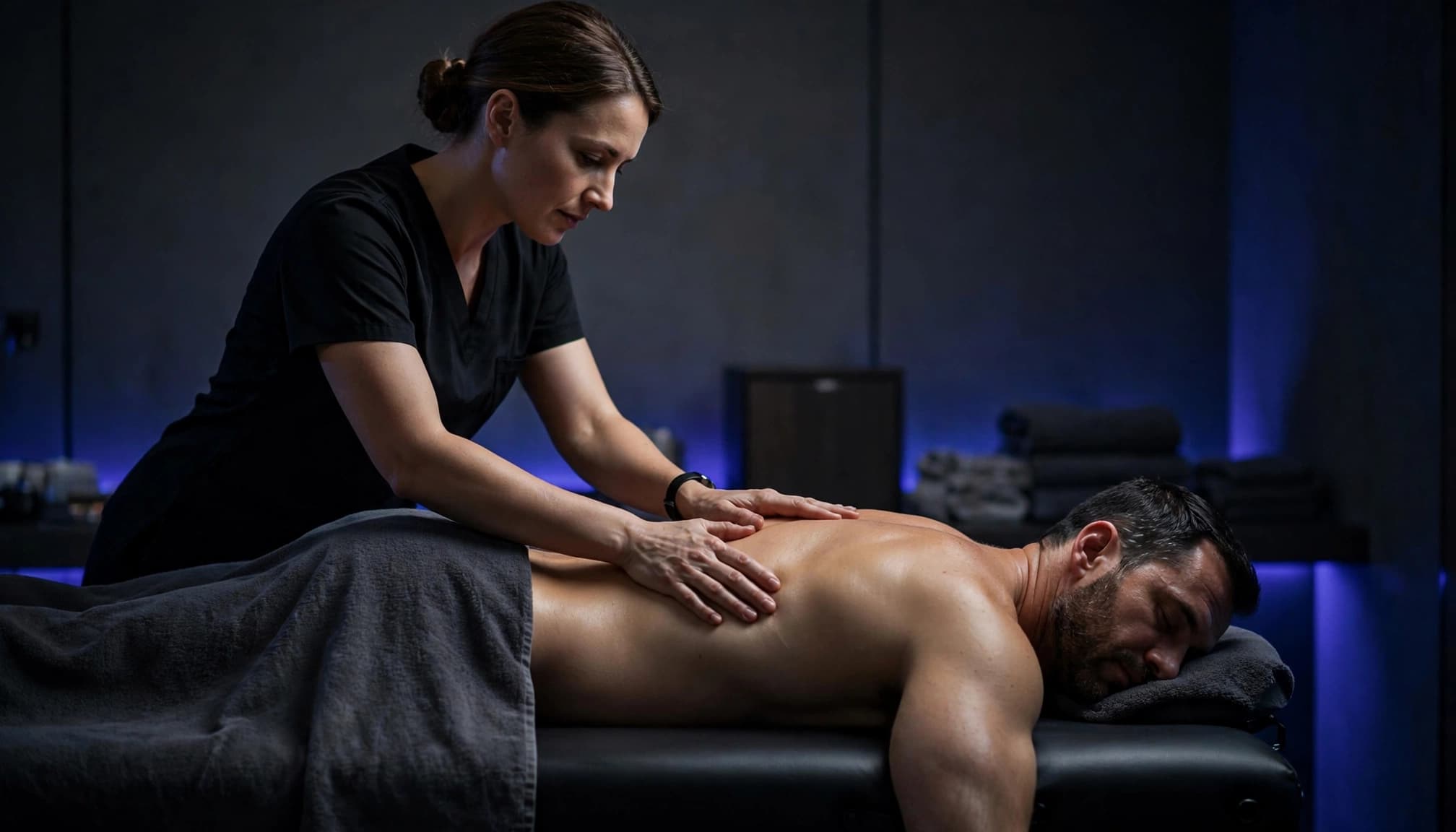
What happens to tight muscles and connective tissue during treatment
A therapist may begin with broad, slower strokes before focusing on a particular band of tension. Sustained pressure, friction, and trigger point work can help the area feel less guarded and easier to move. The goal is to influence how the muscle and surrounding connective tissue respond, not to force the body into submission.
For example, desk work can leave the upper shoulders constantly shortened and tense. A therapist may follow those muscle fibers slowly, pause over restricted areas, and adjust the angle or pressure as the tissue relaxes. Similarly, tight calves after training may need careful work along specific muscle bands rather than a quick pass over both legs.
This process should not be described as physically breaking up scar tissue. Massage may reduce the feeling of tightness or tenderness for some people, but it doesn’t remove every restriction or repair an injury. A therapist also shouldn’t press directly on a suspected fracture, inflamed joint, open wound, or painful nerve.
Deep tissue massage is targeted bodywork, not a test of how much discomfort you can tolerate.
Because focused work takes time, your therapist may spend most of the appointment on your shoulders, hips, or calves instead of giving every part of your body equal attention. A full-body routine can spread pressure too thin when one area causes the main problem. The therapist should explain the plan and check whether the pressure feels useful throughout the session.
Common reasons people book a deep tissue session
People often seek deep tissue massage for ongoing neck and shoulder tension, lower back discomfort linked to muscle strain, hip and leg tightness, or soreness after repetitive activity. Runners, cyclists, and strength-training clients may request focused work when certain muscles feel stiff after exercise. Others book it because prolonged sitting, standing, driving, lifting, or computer work has limited their movement.
Massage may support goals such as:
- Easing the sensation of muscular tightness after repetitive work.
- Improving comfort while moving a stiff, muscular area.
- Supporting short-term recovery after demanding exercise.
- Helping you notice which positions or activities increase tension.
- Reducing tenderness associated with some overused muscle groups.
However, pain doesn’t always come from tight muscles. A disc problem, tendon injury, nerve irritation, arthritis, fracture, infection, or circulation issue may require a different response. Massage shouldn’t replace an examination when symptoms are new, severe, or unexplained.
Ask a doctor or physical therapist to assess pain that radiates into an arm or leg, causes numbness or weakness, follows an accident, or interferes with walking and sleep. You should also seek medical advice for swelling, warmth, fever, sudden loss of movement, or pain that keeps worsening after treatment.
How deep tissue massage feels during and after the appointment
You may feel firm, slow pressure, stretching, or a dull ache in a tense area. Useful therapeutic pressure remains manageable, and your breathing should stay relaxed. Tell your therapist immediately if the sensation becomes sharp, burning, electric, stabbing, numb, or radiates away from the treatment area.
Mild tenderness, stiffness, or a worked-over feeling can occur afterward. It often improves within 24 to 48 hours, although some people notice symptoms for up to 72 hours after intensive treatment. Gentle movement, rest, and normal hydration may help while the area settles.
Large bruises, spreading swelling, persistent numbness, severe pain, or symptoms that worsen instead of improving need medical attention. Speaking up during the appointment protects you from excessive pressure and gives the therapist information needed to adjust the treatment.
What Benefits Can Deep Tissue Massage Provide, and What Are Its Limits?
Deep tissue massage may help reduce muscle tension, improve comfort, and make movement feel easier for some people. However, these effects are usually short term, and massage doesn’t treat every cause of pain. Your results depend on the source of your symptoms, the treatment plan, therapist skill, sleep, activity level, and other care you receive.
Possible benefits for pain, movement, and muscle tension
People with chronic low back discomfort may experience temporary pain relief or improved function after massage. Research suggests massage can help some people with nonspecific low back pain in the short term, although confidence in the evidence remains low or very low. A review of the evidence found that benefits were less clear over longer follow-up periods. You can read the Cochrane evidence on massage for low back pain for a closer look at these findings.

A focused session may also ease the sensation of tightness across the neck, shoulders, hips, or legs. When muscle guarding limits movement, slower pressure may help you move more comfortably for a while. Some people notice less stiffness when turning their head, standing after sitting, reaching overhead, or walking after treatment.
The same principle may apply to muscles that feel overworked after training or repetitive activity. Deep tissue work can give you a better sense of where you hold tension and which movements make symptoms worse. That body awareness can help you adjust posture, rest, warm-ups, or exercise habits.
Still, relief from muscle tension doesn’t prove that massage corrected the underlying problem. Pain may come from a disc, tendon, joint, nerve, fracture, infection, or circulation issue. In those cases, pressing harder can irritate the area or delay the care you need.
A decrease in pain after massage can be useful, but it doesn’t identify the cause of that pain.
Relaxation is another possible benefit, even when the treatment feels intense. After a demanding appointment, you may feel calmer, sleep more comfortably, or notice less awareness of a tense area. These responses can support recovery, but they shouldn’t be confused with a cure.
Why the research should be interpreted carefully
Research on massage therapy includes different techniques, pressure levels, session lengths, and treatment schedules. Many studies also involve small groups, short follow-up periods, or comparisons that make results difficult to apply to every deep tissue massage client. A 2024 systematic review in JAMA Network Open found that the certainty and quality of massage research for pain varied across conditions.
Cost-effectiveness evidence is also limited. Even if massage improves symptoms, studies don’t clearly establish when the expense provides better value than exercise therapy, physical therapy, medical care, or a combination of treatments. Your insurance coverage, location, therapist fees, and required number of sessions can change the calculation.
Personal testimonials offer useful context, but they aren’t the same as clinical evidence. One person may improve because massage reduced muscle guarding, while another may improve because symptoms naturally settled, activity changed, sleep improved, or several treatments worked together. Neither experience proves that deep tissue massage will produce the same result for you.
If pain remains severe, keeps returning, or affects your strength, balance, sleep, or daily activities, arrange a proper evaluation. Repeatedly massaging an unknown problem can postpone treatment for an injury or medical condition.
How to tell whether it is helping you
Judge the treatment by practical changes rather than by how intense it feels. Over the next day or two, notice whether you can move more easily, sit or walk with less discomfort, sleep better, or complete normal activities with less tightness.
Keep a simple record before and after several sessions:
- Rate your usual discomfort and note which movements feel restricted.
- Record how long any improvement lasts.
- Note whether daily activities, exercise, or sleep become easier.
- Track new symptoms, bruising, numbness, or increasing pain.
Temporary soreness isn’t proof that treatment worked. If symptoms worsen, new numbness or weakness appears, pain starts radiating, or improvement doesn’t last, stop or change the plan and seek medical advice. A qualified therapist should welcome that feedback and adjust pressure rather than treating discomfort as a measure of success.
Is Deep Tissue Massage Safe for Everyone? Risks, Precautions, and Red Flags
Deep tissue massage is generally well tolerated by healthy adults when a trained therapist uses appropriate pressure. However, deep pressure can cause more than temporary soreness when it is applied over an injury, fragile bone, healing tissue, active infection, or an underlying medical problem. Before booking a session, share your health history and ask a healthcare professional when you’re unsure.

When to postpone a massage or ask a clinician first
Recent injuries, fractures, or surgery may leave tissue vulnerable to pressure, stretching, or changes in position. Wait for appropriate healing guidance before massage, and tell the therapist exactly when the injury or procedure occurred. Open wounds, burns, active rashes, fever, and skin or soft-tissue infections also need medical attention rather than direct massage over the affected area.
Unexplained swelling deserves caution because it can result from inflammation, injury, infection, or a circulation problem. Never use deep massage to work through suspected blood-clot symptoms, such as new one-sided calf swelling, warmth, discoloration, or throbbing pain. Contact a healthcare professional promptly, especially if the symptoms are sudden.
People with severe osteoporosis or very low bone density may face a greater fracture risk from forceful pressure. Bleeding disorders and blood-thinning medications, including anticoagulants, can also increase the chance of significant bruising or bleeding. These conditions don’t always rule out every form of massage, but they do require a clinician’s advice and a therapist who can modify the treatment.
Pregnancy and cancer require individualized planning rather than a blanket answer. If you’re pregnant, ask your prenatal care provider whether massage is appropriate, particularly if the pregnancy is high risk or you have complications. Choose a therapist trained in pregnancy massage, safe positioning, and pressure modifications.
Massage may also be possible during cancer treatment, but the therapist should understand your diagnosis, treatment effects, surgical sites, ports, lymphedema risk, and areas that need protection. Ask your oncologist or another appropriate healthcare provider before deep work. Guidance on massage precautions in cancer care is also discussed in this medical consensus review.
Serious or unstable conditions, including uncontrolled cardiovascular problems or other high-risk illnesses, need professional clearance. A therapist’s intake form cannot replace medical assessment when symptoms are new, severe, or unexplained.
What safe pressure should feel like
Deep tissue massage may feel strong, focused, or tender. You should still be able to breathe normally and relax the muscles around the treatment area. A tolerable sensation may feel intense, but it shouldn’t feel sharp, stabbing, burning, electric, or as though it travels along a nerve.
Use a simple communication scale during the session:
- Comfortable: The pressure feels useful, and you can breathe and speak normally.
- Too strong: You begin tensing, holding your breath, pulling away, or guarding the area.
- Stop: You feel sharp pain, numbness, tingling, dizziness, nausea, or an electric sensation.
Tell your therapist as soon as the pressure crosses from productive discomfort into pain. A responsible professional will welcome feedback and change the position, speed, pressure, or technique. You never need to tolerate pain to prove that the massage is effective.
Soreness can occur after deep tissue massage, but sharp or radiating pain is a reason to stop immediately.
Warning signs that need medical attention after massage
Mild tenderness may occur for a day or two, but severe or worsening symptoms should not be dismissed as normal soreness. Stop massage and seek prompt medical advice if you develop:
- Severe pain that doesn’t settle or continues to increase.
- Major or growing swelling, especially in one limb.
- New weakness, numbness, tingling, or loss of sensation.
- Unusual or widespread bruising, particularly while taking blood thinners.
- Trouble breathing, chest pain, fainting, or coughing blood.
- A severe headache, confusion, or sudden vision changes.
- Dark urine, especially with intense muscle pain or marked weakness.
One-sided leg swelling or calf pain followed by chest pain or breathing trouble may signal a serious clot-related emergency. Call emergency services rather than waiting for the massage therapist to assess it. Likewise, severe localized pain after forceful pressure may need evaluation for an injury, particularly when osteoporosis or recent surgery is involved.
Massage should never delay urgent medical care. Contact the therapist afterward if you need to report a reaction, but seek medical evaluation first when serious symptoms appear.
How to Prepare for a Deep Tissue Massage and Get Better Results
Good preparation helps your therapist tailor the session instead of guessing where to apply pressure. Before booking, check qualifications, discuss your health history, choose a clear goal, and plan enough time for your body to recover afterward.
Questions to ask before you book
Choose a therapist who holds a current license where local licensing applies or has recognized professional training that meets local health requirements. Ask how much experience they have with deep tissue massage and whether they regularly treat your body area and concern, such as shoulder tension, lower back discomfort, or post-exercise tightness.
Before confirming the appointment, ask:
- How long will the session last, and how much time will focus on my main concern?
- Can you adjust the pressure during treatment?
- What privacy and draping procedures do you follow?
- What is the total price, including any taxes, service fees, or travel charges?
- What is your cancellation or rescheduling policy?
- What should I do if I need the session to stop?
Many practices offer 60- or 90-minute appointments. A 60-minute session may suit a first visit or one focused area, while 90 minutes allows more time for several areas or a full-body treatment. Confirm whether consultation and changing time count toward the appointment.
Ask the provider to confirm that the practice follows local licensing, sanitation, and health requirements. You can also review massage medication precautions if you take prescription drugs or bruise easily.

What to tell your therapist before the session starts
Tell your therapist about current pain, recent injuries, surgeries, fractures, skin problems, and any area that should be avoided. Also disclose medications that affect bleeding or bruising, including anticoagulants and some antiplatelet drugs. Pregnancy, allergies, osteoporosis, circulation problems, cancer treatment, and other medical conditions also belong in the intake conversation.
Your exercise habits matter too. Explain whether you lift weights, run, play sports, perform repetitive work, or recently increased training. This information helps the therapist distinguish ordinary muscle fatigue from symptoms that need medical evaluation.
Describe the result you want rather than asking for maximum pressure. For example, say, “I want to turn my head more comfortably because my right shoulder feels tight.” That gives the therapist a useful target while leaving room to choose safe techniques.
Wear comfortable clothing and avoid a heavy meal immediately before treatment. You usually undress only to your comfort level and remain covered with a sheet, with the therapist exposing one area at a time. Drink fluids normally before and after the appointment, but don’t force excessive water.
Aftercare, soreness, and when to schedule another session
After a deep tissue massage, take a short walk or perform gentle movement if it feels comfortable. Normal hydration, light stretching, and adequate rest may help you feel less stiff. Avoid unusually hard training for at least the rest of the day, especially if the therapist worked intensely on muscles you plan to exercise.
Mild tenderness can occur, often peaking within about 24 hours and improving over the next day or two. It should remain manageable and temporary. Severe pain, spreading swelling, significant bruising, new numbness, weakness, or worsening symptoms require medical advice. Massage contraindication guidance can help explain when treatment needs to be postponed or modified.
Schedule another session according to your goals, response, budget, and professional advice. Some people benefit from occasional appointments, while others need a broader plan involving exercise or physical therapy. More pain never proves that a massage worked better.
How much deep tissue massage costs
Price depends on your city, the therapist’s experience, session length, treatment area, and whether you visit a clinic, day spa, resort, or independent provider. Focused work may cost less than a full-body appointment, although a longer appointment can raise the total.
As a broad US guide, one hour may cost roughly $50 to $150, but this is not a universal current rate. High-cost cities and resort settings may charge more, while independent providers or smaller clinics may charge less. Ask for the complete price before booking, including add-ons and cancellation fees.
Local rates can differ substantially, including prices in Kenya. Contact the provider directly for an accurate quote, available session lengths, and any current package or first-visit pricing.
Deep Tissue Massage vs. Swedish and Sports Massage: Which Fits Your Goal?
Deep tissue, Swedish, and sports massage can all reduce muscle tension, but they are designed for different goals. The best choice depends on your symptoms, health, activity level, and comfort with pressure, not on which treatment sounds strongest. Also, these categories can overlap because skilled therapists often combine methods during one session.

Deep tissue versus Swedish massage
Deep tissue massage uses slower, focused pressure on specific areas of persistent tightness. A therapist may work along muscle fibers, fascia, or a tense band of tissue while checking your response and adjusting the pressure. The session may focus on one shoulder, the lower back, hips, or another area that limits your movement.
Swedish massage usually uses long, flowing strokes, kneading, rhythmic movements, and lighter pressure. It often covers more of the body and creates a calmer, more relaxing experience. If your main goal is stress reduction, general comfort, better relaxation, or relief from mild tension, Swedish massage may be the better starting point.
That difference doesn’t mean Swedish massage must feel gentle. Your therapist can increase the pressure when appropriate, and a firm Swedish massage may ease substantial muscle tension. Likewise, deep tissue massage can include broad, soothing strokes at the beginning or end of a session.
| Your main goal | A likely starting point |
|---|---|
| Relaxation and stress relief | Swedish massage |
| General muscle comfort | Swedish massage |
| Persistent tightness in a specific area | Deep tissue massage |
| Limited movement linked to muscular tension | Deep tissue massage |
| A mixture of relaxation and focused work | A customized combination |
Pressure should never become a contest. A deep tissue session may feel intense, but sharp, burning, electric, or radiating pain is a reason to speak up immediately. For more background on massage safety and possible risks, review the NCCIH massage therapy guidance.
Deep tissue versus sports massage
Sports massage is organized around your activity and movement goals. A therapist may ask what sport you play, how often you train, whether you are preparing for an event, and whether you have a history of strains or other injuries. The plan can change depending on whether you need pre-event preparation, recovery after training, or help with a recurring movement problem.
Techniques may include compression, stretching, trigger point work, mobility-focused methods, and selected deep tissue pressure. Sports massage isn’t always intense. Before competition, a therapist may use lighter, faster work, while recovery sessions may include slower pressure on overworked muscles.
You don’t have to be a competitive athlete to benefit from sports-style planning. Repetitive lifting, running, cycling, swimming, dance, or physically demanding work can create similar movement demands. On the other hand, athletes may sometimes benefit more from traditional deep tissue massage when one area has persistent tension that needs focused attention.
Sports massage and deep tissue massage often overlap, but their priorities differ. Deep tissue massage usually centers on a specific tight or painful area. Sports massage connects treatment to training load, mobility, performance, and recovery.
A simple way to choose the right treatment
Use your main goal as the first filter:
- Choose relaxation-focused Swedish massage when general stress, mild tension, or overall comfort is your priority.
- Choose targeted deep tissue work when persistent muscle tightness affects movement and a healthcare professional has ruled out a more serious cause.
- Choose sports massage when your concern relates to training, repetitive physical activity, athletic recovery, or sport-specific movement.
A consultation is the safest next step when you can’t explain where the pain comes from. Ask for medical guidance if symptoms include numbness, weakness, swelling, fever, severe pain, or discomfort that radiates into an arm or leg. Your therapist can adapt pressure and techniques, but massage should not replace an evaluation for an unexplained injury or medical condition.
Choosing Sherry Massage Spa for a Deep Tissue Massage
If you’re considering Sherry Massage Spa for deep tissue massage, verify the details before you pay or travel. Public information can change, and similarly named spas may have different services, prices, locations, and booking rules. Contact Sherry Massage Spa directly and confirm that the information applies to the exact branch you plan to visit.
A spa’s name alone doesn’t tell you whether its treatment matches your needs. Your first conversation should clarify what you want treated, how intense the session will be, and whether massage is suitable for your symptoms.
What to confirm before making an appointment
Use this short checklist when you contact the spa:
- Confirm that deep tissue massage is currently available, and ask for the exact treatment name used on the menu.
- Ask how long the appointment lasts. Check whether the advertised duration includes consultation, changing, and aftercare.
- Confirm the full cost in the correct currency, including taxes, service fees, deposits, or other charges.
- Ask about the therapist’s training and experience with deep tissue work, particularly for your main concern.
- Check which appointment times are available and whether you need to arrive early.
- Confirm accepted payment methods, including cards, mobile payments, cash, or advance payment.
- Verify the exact location, branch, floor, parking details, and directions if more than one site exists.
- Ask how to book, whether the appointment is confirmed immediately, and whether you will receive written confirmation.
- Read the cancellation and rescheduling rules before providing payment details.
- Ask whether the spa completes a health screening or intake form before treatment.
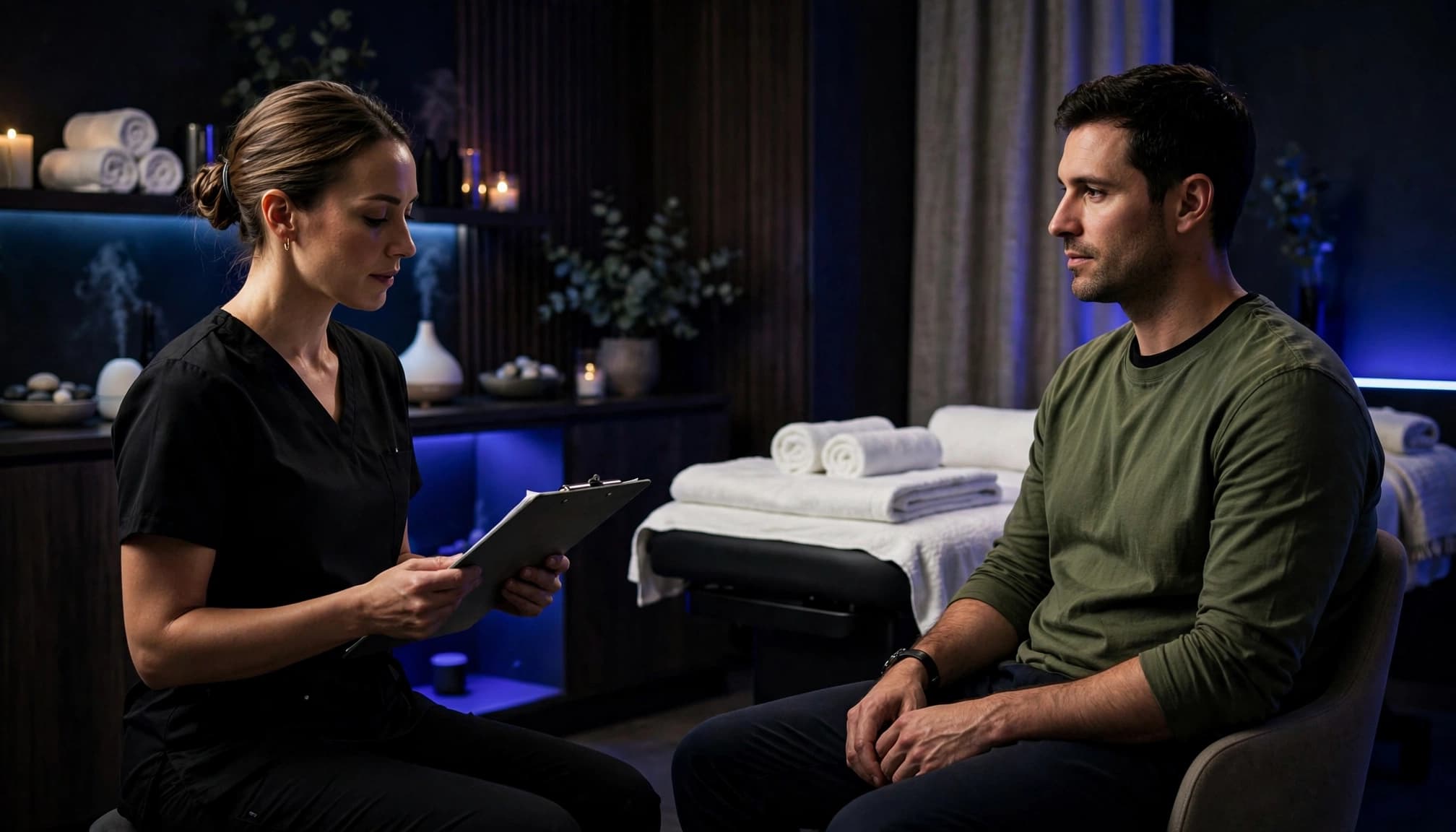
Describe your main concern in plain language, such as persistent shoulder tension, restricted movement, or post-exercise muscle soreness. Then ask whether deep tissue massage is appropriate for that concern. Pain that radiates, causes numbness or weakness, follows an injury, or comes with swelling may need medical assessment instead.
Don’t assume a price or treatment description found on an older menu still applies. Ask the spa to confirm current details directly before you commit.
What a quality first visit should include
A professional first visit begins with a private intake conversation. The therapist should ask about your symptoms, medical conditions, recent injuries, surgeries, medications, pregnancy, skin problems, and areas you want avoided. You should also have time to explain your goals and ask questions.
Before touching you, the therapist should explain the proposed treatment, expected pressure, areas to be addressed, and any modifications they recommend. You should give informed consent, and you can change your mind at any point. Proper draping matters too. Only the area being treated should be uncovered, while the rest of your body remains comfortably covered.
During the massage, expect regular pressure checks. A skilled therapist may ask whether the pressure feels comfortable, too light, or too strong. You should be able to request less pressure, a different technique, a new position, or a complete stop without feeling embarrassed.
A reputable provider treats your feedback as part of the session, not as a challenge to their skill.
Severe pain is not a requirement for effective deep tissue massage. Sharp, burning, electric, radiating, or worsening pain is a reason to stop immediately. A trustworthy spa will modify or end the technique when you say it feels unsafe. Clean facilities, respectful communication, secure privacy, and clear aftercare instructions should support the entire visit.
Frequently Asked Questions
Deep tissue massage can feel different from one appointment to the next, depending on your symptoms, activity, pressure level, and recovery. These answers address practical questions that often come up after someone has chosen a therapist and understands the basic risks.

How often should I get deep tissue massage?
The right schedule depends on how your body responds and what you want to improve. Some people begin with appointments every one to two weeks, then reduce sessions as symptoms stabilize and exercise, stretching, or other care becomes more effective.
Wait longer between appointments if soreness lasts beyond 48 hours, your movement worsens, or the treatment leaves you more uncomfortable each time. Regular massage shouldn’t become the only strategy for recurring pain. If symptoms keep returning, ask a physical therapist or physician to assess the cause.
Can I exercise after a deep tissue massage?
Light movement is usually more suitable than intense training immediately after focused treatment. A relaxed walk, gentle mobility work, or ordinary daily activity may help you avoid stiffness without adding heavy stress to already tender muscles.
Give yourself at least the rest of the day before hard lifting, sprinting, or demanding sports, especially after your first session. If a muscle feels sore, weak, swollen, or painful during movement, skip the workout and wait until it settles. Training through worsening symptoms can make it harder to tell normal post-massage tenderness from an injury.
Should I drink extra water after deep tissue massage?
Drink normally before and after your appointment, but you don’t need to force large amounts of water. A glass after treatment and regular sips during the following hours are reasonable if you’re thirsty, particularly after exercise or time spent in a warm environment.
Water doesn’t flush toxins released by massage, because that claim isn’t supported by established medical evidence. Instead, focus on ordinary hydration, a balanced meal, and rest. Avoid using excessive water intake as a substitute for medical care if you feel dizzy, nauseated, unusually weak, or unwell.
Is it normal to feel tired after a massage?
Some people feel relaxed or tired after treatment, especially when the session reduces long-standing muscle guarding. Plan a little quiet time afterward if you can, and avoid scheduling a demanding activity immediately after your appointment.
Tiredness should be mild and temporary. Seek medical advice if fatigue is severe, lasts unusually long, or appears with fainting, breathing difficulty, chest pain, confusion, or significant weakness. Those symptoms need more attention than routine post-massage relaxation.
Can deep tissue massage improve a recurring problem permanently?
Massage may reduce muscle tension and improve comfort for a period, but it doesn’t guarantee permanent relief. Recurring symptoms often involve several factors, such as training load, posture, sleep, joint problems, nerve irritation, or an untreated injury.
Use improvement as a chance to work on the cause, not as proof that the problem has disappeared. A broader plan might include strengthening, mobility exercises, ergonomic changes, physical therapy, or medical treatment. The massage therapy guideline discussion also shows why treatment decisions need to account for safety, training, and the person’s wider health needs.
What should I do if I bruise easily?
Tell your therapist before the session if you bruise easily or take anticoagulants, antiplatelet medication, or supplements that affect bleeding. The therapist may use lighter pressure, avoid certain areas, or recommend medical clearance before treatment.
A small, localized bruise can occur after forceful work, but large, spreading, painful, or unexplained bruises need medical advice. Massage is also inappropriate over suspected clots, active skin infections, open wounds, or areas with unexplained swelling. The known contraindications for therapeutic massage include conditions such as deep vein thrombosis and damaged skin.